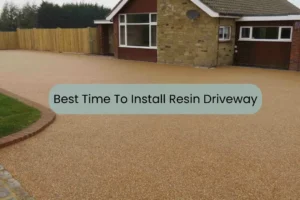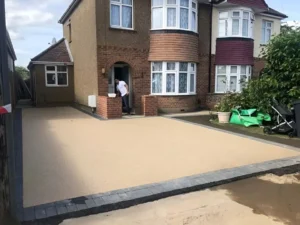
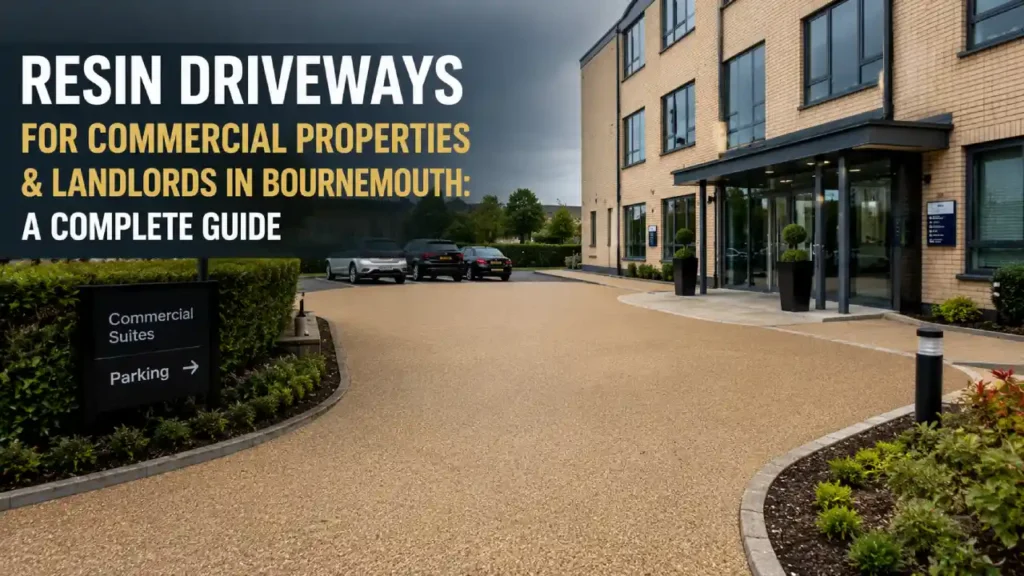
A commercial resin driveway is a permeable, resin bound surface designed for business premises, car parks, access roads and rental properties. For Bournemouth businesses and landlords, it offers a hard-wearing, anti-slip, low-maintenance finish that handles daily vehicle traffic, stays SuDS-compliant, and keeps a property looking professional for 15 to 20 years. It is one of the most cost-effective surfacing choices for any commercial or buy-to-let property across Dorset.
If you own a business premises, manage a car park, or let out property in Bournemouth, the surface at your entrance does more work than you might think. It shapes first impressions, affects safety underfoot, and quietly adds to your running costs every time it needs patching or clearing. This guide explains why so many commercial owners and landlords across Bournemouth, Poole, Christchurch and the wider Dorset area are choosing resin bound surfacing, what it costs, and how the process works.
What Is Commercial Resin Bound Surfacing?
Commercial resin bound surfacing is a mixture of natural stone aggregate and a clear, UV-stable resin, trowelled by hand onto a prepared base to create a smooth, seamless, fully permeable surface. The same material used on domestic driveways is specified differently for commercial use, with a deeper build-up, a stronger base, and sometimes a reinforcement layer to carry heavier and more frequent traffic.
The difference between commercial and domestic work is mostly in the engineering beneath the surface. A home driveway is built for a handful of cars a day. A commercial car park, forecourt or access road may see hundreds of vehicle movements, including vans and delivery lorries, so the base depth and resin specification are increased accordingly.
Resin bound is commonly used on:
- Office and retail car parks
- Business forecourts and entrances
- Access roads and loading bays
- Pathways and pedestrian walkways around commercial sites
- Communal driveways and parking areas at rental properties
Why Businesses in Bournemouth Choose Resin Surfacing
A commercial surface has to look good and perform under pressure. Resin bound does both, which is why it has become a leading choice for business premises across Dorset.
Professional first impressions and kerb appeal
The entrance to your premises is the first thing clients, customers and tenants see. A smooth, seamless resin surface signals that a business is well run and cared for. Unlike loose gravel or worn tarmac, resin holds a clean, consistent appearance year after year, with no scattered stones, ruts or patched repairs to undermine the look.
Durability under heavy, daily traffic
Resin bound surfaces are hard-wearing and resist cracking, rutting and sinking when correctly specified and laid on a sound base. This makes them well suited to high-traffic commercial environments where vehicles move constantly throughout the day. A properly installed surface carries cars, vans and heavier vehicles without the surface degradation common to cheaper alternatives.
Low maintenance means lower running costs
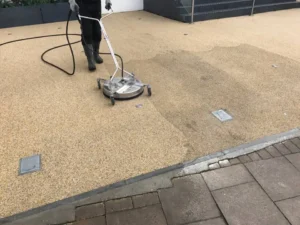
For a business, every repair is both a cost and a disruption. Resin bound surfacing is low maintenance by design. It resists weeds, does not shed loose stone, and usually needs only occasional sweeping and gentle washing to stay presentable. Over the life of the surface, that translates into meaningfully lower upkeep costs than gravel, block paving or tarmac.
Resin for Car Parks, Forecourts and Access Roads
Car parks and access roads are among the most demanding surfaces a commercial property has. They face constant turning, braking and loading, plus the standing water that causes long-term damage to non-permeable surfaces.
Resin bound surfacing answers these demands in several ways:
- Load-bearing strength. Specified with the correct base build-up, resin carries frequent and heavy vehicle traffic without rutting.
- Overlay capability. In many cases resin can be laid over existing, stable tarmac or concrete, reducing excavation, cost and downtime. A reinforcement mesh can be added to bridge minor cracks in an older base and prevent them showing through.
- Permeable drainage. The porous surface lets rainwater drain through into the base rather than pooling, eliminating standing water and reducing flood and ice risk.
- Clear vehicle delineation. Different aggregate colours can mark bays, walkways and traffic routes within the same seamless surface.
The result is a car park or forecourt that handles heavy use while staying safe, drained and visually consistent.
Resin Driveways for Landlords and Rental Properties
For landlords, surfacing is a numbers decision as much as an aesthetic one. A driveway that needs constant attention eats into yield and creates work between tenancies. Resin bound surfacing is well matched to the realities of letting property.
Why low-maintenance surfacing suits buy-to-let and HMOs
Tenants are unlikely to maintain a driveway the way an owner-occupier might. A surface that resists weeds, does not shift, and cleans up easily protects the property’s appearance without depending on tenant upkeep. For HMOs and multi-occupancy properties with shared parking, a durable seamless surface stands up to heavier, less careful use.
Adding rental value and tenant appeal
Kerb appeal matters for rentals just as it does for sales. A clean, modern, well-finished entrance helps a property let faster, supports a stronger rent, and signals to prospective tenants that the property is well maintained. A surface that already meets modern drainage standards is one less concern for a letting agent or prospective tenant.
Reducing repair call-outs between tenancies
Every void period is a chance for hidden costs. Cracked tarmac, sunken block paving and loose gravel all generate repair call-outs and complaints. A resin bound surface, laid once on a sound base, removes most of that recurring maintenance, making it a sound long-term investment for a buy-to-let portfolio.
Compliance: SuDS, Drainage and Planning Permission
Drainage and compliance are not optional extras on a commercial site; planning authorities, developers and facilities managers expect surfaces to meet them.
Resin bound surfacing is inherently permeable. When laid over a correctly specified porous base, water drains through the surface into the ground beneath, supporting compliance with the Sustainable Drainage Systems (SuDS) principles set out in UK planning guidance. This permeability reduces surface water run-off and helps lower flood risk.
On planning permission: because permeable surfaces allow rainwater to drain naturally, they often avoid the planning requirements that apply to impermeable surfaces. For commercial developments, drainage performance specified at the planning stage can make approval more straightforward. Requirements vary by site and scale, so it is always worth confirming the position for your specific property before work begins.
How Much Does a Commercial Resin Driveway Cost?
The honest answer is that commercial pricing depends on the site, because no two car parks or forecourts are the same. The main cost factors are:
| Cost factor | Why it affects price |
|---|---|
| Total area (m²) | Larger areas cost more overall but often less per m² |
| Existing surface and groundwork | Whether the base is sound, needs repair, or full excavation |
| Base specification | Commercial loads need a stronger, deeper build-up (e.g. MOT Type 1) |
| Reinforcement | Mesh or extra build-up for heavy-traffic areas adds cost |
| Aggregate and resin choice | Premium blends and bespoke colours vary in price |
| Access and site logistics | Restricted access or phased works affect labour |
As a general guideline, resin bound surfaces in the UK commonly fall in the region of £80 to £120 per square metre excluding groundworks, though commercial specifications with heavier bases can sit differently. The only accurate figure is a quote based on a site survey. We provide free, no-obligation commercial surveys across Bournemouth and Dorset.
Resin vs Tarmac vs Block Paving for Commercial Use
| Feature | Resin Bound | Tarmac | Block Paving |
|---|---|---|---|
| Appearance | Smooth, seamless, customisable | Functional, plain | Traditional, patterned |
| Permeable (SuDS) | Yes | No (standard) | Partially / with gaps |
| Weed resistance | High | Medium | Low (grows between blocks) |
| Maintenance | Low | Medium | Higher (re-sanding, lifting) |
| Loose material | None | None | Can shift over time |
| Typical lifespan | 15–20+ years | 10–15 years | 15–20 years (with upkeep) |
| Best for | Forecourts, car parks, rentals | Roads, large plain areas | Period/traditional settings |
For most commercial and rental applications where appearance, drainage and low maintenance matter, resin bound offers the strongest all-round balance.
Our Commercial Resin Process in Bournemouth and Dorset
We keep the process clear and low-disruption, which matters when a business needs to stay operational.
- Free site survey. We assess the area, existing surface, traffic load and drainage, then discuss your requirements.
- Specification and quote. We recommend the right base build-up, resin system, reinforcement and colour, with transparent, no-obligation pricing.
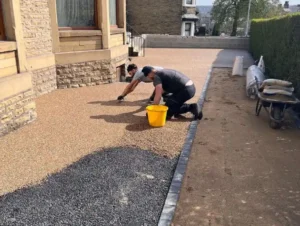
- Installation. Our team prepares the base and lays the resin with precision, phasing the work where needed to limit downtime.
- Aftercare. Your surface is ready to use within days, with straightforward maintenance guidance to keep it performing.
We install commercial resin surfacing across Bournemouth, Poole, Christchurch, Ferndown, Ringwood and the surrounding Dorset area, and we understand how the local coastal climate affects long-term surface performance.
Frequently Asked Questions
Is resin strong enough for a commercial car park?
Yes. When specified with the correct base build-up and, where needed, a reinforcement layer, resin bound surfacing carries frequent and heavy vehicle traffic, including vans and delivery vehicles, without rutting or cracking. Correct specification and professional installation are essential, which is why a site survey comes first.
Do I need planning permission for a commercial resin driveway?
In many cases no, because resin bound is permeable and allows water to drain naturally, which often avoids the planning requirements that apply to impermeable surfaces. Requirements vary by site and scale, so confirm the position for your specific commercial property before work begins.
How long does commercial resin surfacing last?
A professionally installed resin bound surface typically lasts 15 to 20 years or more, depending on traffic levels, the quality of the base, and basic maintenance. UV-stable resin helps the surface keep its colour and strength over time.
Is resin a good choice for rental properties?
Yes. For landlords, resin bound is low maintenance, resists weeds and loose stone, and keeps a clean appearance without relying on tenant upkeep. It supports kerb appeal, can help a property let faster, and reduces repair call-outs between tenancies, making it a sound long-term investment.
How much does a commercial resin driveway cost in Bournemouth?
Cost depends on area, groundwork, base specification and material choice. Resin bound surfaces commonly fall in the region of £80 to £120 per square metre excluding groundworks, but commercial specifications vary. The only accurate figure is a quote based on a free site survey.
Get a Free Commercial or Landlord Quote in Bournemouth
Whether you are upgrading a business car park, refreshing a forecourt, or improving a rental property’s kerb appeal, we can help you specify the right resin bound surface for the job. Contact our Bournemouth team for a free quote across Bournemouth, Poole, Christchurch and the wider Dorset area.