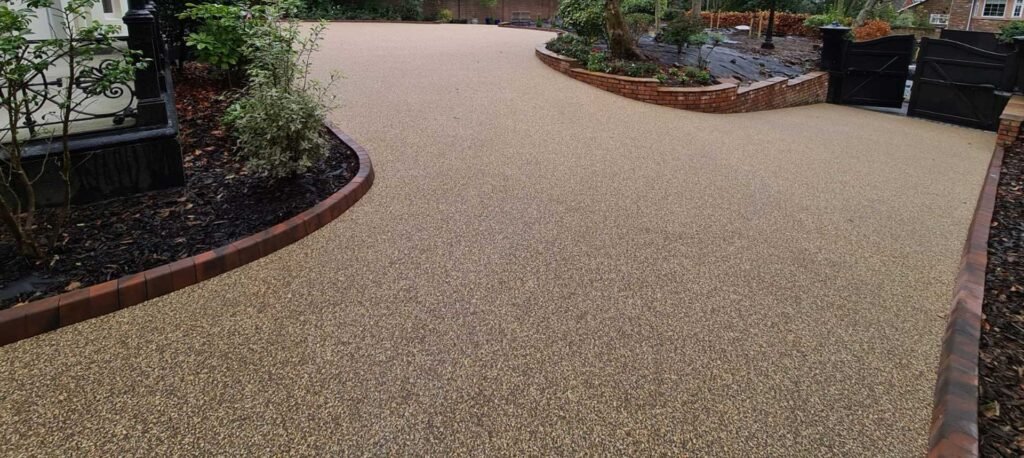
Resin driveways are generally well suited to frost and freezing conditions in the UK, but the full answer depends on how they are installed and how the surface is maintained. In simple terms, they tend to cope better than many traditional driveway materials because they allow water to drain and have a slight flexibility that helps them handle temperature changes.
For homeowners in places like Dorset and Bournemouth, where winter often brings a mix of rain, damp air and occasional freezing temperatures, this matters more than you might think. A driveway that looks good in summer but struggles in winter quickly becomes a problem.
This guide explains how resin driveways actually perform in cold conditions, where they can fail, and what to expect long term.
Do Resin Driveways Freeze in Winter?
Like any outdoor surface, resin driveways can freeze when temperatures drop below zero. If water sits on top of the surface overnight, it can turn to ice just as it would on concrete or tarmac.
The difference is in how much water is able to sit there in the first place.
Resin-bound driveways are designed to be permeable, which means rainwater drains through the surface rather than collecting on top. In the UK climate, where winter is often wet before it is cold, this makes a noticeable difference. Less standing water means fewer icy patches forming in the first place.
So while resin driveways are not completely immune to freezing, they are generally less prone to it compared to non-permeable surfaces.
Are Resin Driveways Resistant to Frost Damage?
Resin driveways are best described as frost-resistant rather than frost-proof.
What helps them here is the combination of flexibility and structure. Unlike rigid materials such as concrete, resin has a small amount of give. This allows it to cope better when temperatures drop and materials naturally expand and contract.
At the same time, a properly prepared sub-base underneath the resin plays a crucial role. If the foundation is stable and well compacted, the surface above it is far less likely to shift or crack during colder months.
Where problems do occur, it is usually not because resin cannot handle frost, but because something underneath it was not done correctly.
What Happens During Freeze Thaw Cycles?
One of the biggest causes of driveway damage in the UK is the freeze thaw cycle. This happens when water freezes overnight, expands, and then melts again during the day. Repeated over time, this process can weaken surfaces and cause cracks.
With traditional driveways, water often gets trapped. When it freezes, it pushes against the material with nowhere to go. That pressure builds up and eventually leads to visible damage.
Resin driveways deal with this differently. Because the surface allows water to pass through, there is far less moisture trapped within it. On top of that, the resin itself can absorb small amounts of movement without breaking.
This combination of drainage and flexibility is what allows resin to perform more reliably through repeated winter cycles.
Can Resin Driveways Crack in Cold Weather?
They can, but it is important to understand why.
In most cases, cracking is not caused directly by cold weather. Instead, winter simply exposes weaknesses that were already there. If the driveway has been installed on a poor base, or the materials were not mixed and applied correctly, freezing conditions can accelerate the problem.
For example, a driveway laid over an unstable surface may begin to shift slightly. Once temperatures drop, any trapped moisture expands and puts additional stress on those weak points. That is when cracks start to appear.
On the other hand, a properly installed resin driveway, with the right depth and a solid sub-base, should remain stable through winter without noticeable damage.
How UK Weather Impacts Resin Driveways
The UK climate is not just cold, it is consistently damp. That is what makes it different from many other regions.
In areas such as Dorset, you are often dealing with a combination of:
- Frequent rainfall
- High moisture levels in the air
- Occasional frost
- Coastal exposure, particularly in places closer to the sea
This constant moisture is actually more of a challenge than the cold itself.
Resin driveways are particularly suited to these conditions because they allow water to drain away rather than sit on the surface. This reduces long-term wear and helps prevent issues like moss growth, which can make driveways slippery in winter.
However, if drainage is not properly planned during installation, even a resin surface can struggle. That is why local experience matters when choosing a contractor.
How Resin Compares to Other Driveway Materials in Winter
When comparing driveway options, winter performance is often overlooked until problems appear.
Concrete, for example, is strong but rigid. Once it starts to crack under freeze–thaw pressure, repairs can be difficult and costly. Tarmac can become brittle in colder temperatures and may deteriorate over time.
Block paving brings a different issue. Individual blocks can shift, allowing water to collect between them. Once that water freezes, it can cause uneven surfaces and ongoing maintenance problems.
Resin sits somewhere in the middle. It combines strength with a degree of flexibility and, most importantly, manages water more effectively. That is why many homeowners now see it as a long-term option rather than just a cosmetic upgrade.
Looking After a Resin Driveway in Winter
While resin driveways are relatively low maintenance, a small amount of care goes a long way in winter.
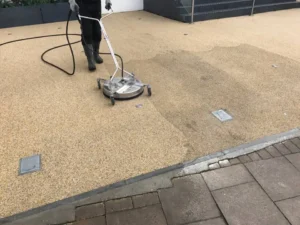
Keeping the surface clear of debris is one of the simplest and most effective steps. Leaves, dirt and moss can trap moisture and increase the chance of ice forming.
It is also worth being careful with how ice is treated. Standard de-icing salt can be used, but it should not be over-applied. Gentle clearing methods are always better than aggressive scraping, which can damage the surface over time.
Most importantly, regular inspection helps. Spotting small issues early prevents them from becoming bigger problems later.
Why Installation Quality Matters More Than Anything
If there is one factor that determines how well a resin driveway handles freezing temperatures, it is the quality of installation.
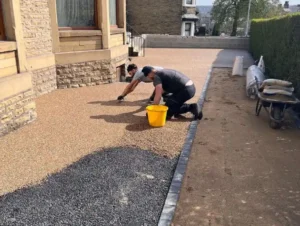
A well-installed driveway includes proper ground preparation, a stable sub-base, and correct drainage design. These elements are not visible once the job is finished, but they are what make the difference over time.
Cut corners at this stage, and even the best materials will struggle. Get it right, and the driveway will handle years of UK weather with minimal issues.
Are Resin Driveways a Good Choice for UK Winter Conditions?
For most homeowners, the answer is yes.
Resin driveways offer a balance that is difficult to achieve with other materials. They manage water effectively, cope well with temperature changes, and require relatively little maintenance once installed.
They are not completely immune to problems, but when compared to other driveway options, they tend to perform more consistently in the kind of winter conditions we see across the UK.
Choosing the Right Driveway for Your Property in Dorset
If you are planning to upgrade your driveway in Dorset or nearby areas, it is worth thinking beyond appearance. Winter performance, drainage and long-term durability all play a role in how satisfied you will be a few years down the line.
Resin driveways have become a popular choice because they address many of the issues that traditional materials struggle with in the UK climate. They are not just about looks, they are about reliability.
Thinking About a Resin Driveway?
If you want a driveway that performs well throughout the year, including during colder months, it is important to get both the material and the installation right.
BH Resin Driveways focuses on delivering surfaces that are built for UK conditions, with proper preparation and attention to detail from the ground up.
If you are considering a new driveway or replacing an existing one, getting professional advice early on can help you avoid costly mistakes and ensure you end up with something that lasts.