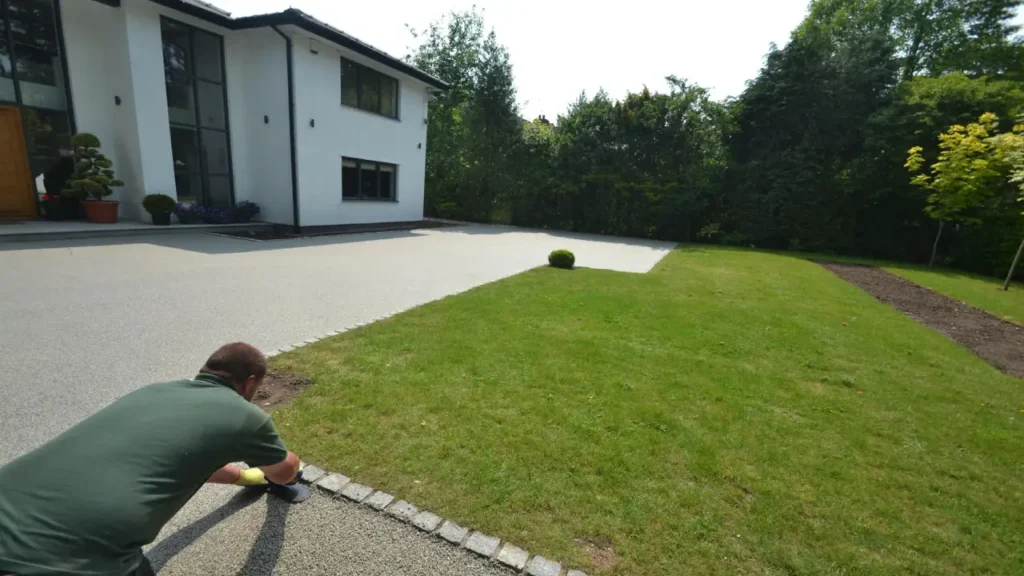
If you’re thinking about installing a resin driveway, one of the first questions you’ll probably ask is simple: do I need planning permission?
It’s a fair concern. Nobody wants to invest in a new driveway only to run into problems with the council later. In Bournemouth, planning rules are generally straightforward, but there are important details that homeowners should understand before work begins.
This guide explains when you do and do not need planning permission for a resin driveway, how the 5 square metre rule works, what SuDS compliance means, and when you might need approval for a dropped kerb. By the end, you should have a clear idea of where you stand.
In Many Cases, You Don’t Need Planning Permission
For most houses in Bournemouth, a resin driveway does not require planning permission, as long as it meets certain conditions.
In England, paving over a front garden is usually allowed under permitted development rights. However, this depends on how water drains from the surface.
The key factor is permeability.
If the driveway surface allows water to drain through it naturally, or if water is directed to a lawn or border rather than the public highway, planning permission is generally not required.
Because resin bound driveways are permeable when installed correctly, they often fall within permitted development.
The 5 Square Metre Rule Explained Clearly
You may have heard about the 5 square metre rule. This applies to driveways installed in front gardens.
If you are installing a non-permeable surface covering more than 5 square metres and water drains onto the road or pavement, planning permission is required.
If the surface is permeable or water drains to a permeable area within your property, permission is usually not needed.
Resin bound driveways are designed to allow water to pass through the surface and into the base below. When built properly, they support sustainable drainage principles and avoid surface runoff.
That is why many resin driveways in Bournemouth are installed without formal planning permission.
When You Might Need Planning Permission in Bournemouth
While most resin driveway projects fall under permitted development, there are situations where you may need approval.
Non-Permeable Installations
If a resin surface is laid over a non-permeable base that does not allow drainage, it may not qualify under permitted development rules. Proper base preparation matters.
Conservation Areas and Listed Buildings
If your property is in a conservation area or is a listed building, planning rules can be stricter. External changes to the front of the property may require permission, regardless of surface type.
If you are unsure whether your home falls into one of these categories, you can check local records or contact BCP Council for guidance.
Flats and Shared Properties
Permitted development rights typically apply to houses. Flats, maisonettes, or properties with shared access may require formal approval before altering the front garden or access.
What About Dropped Kerbs and Vehicle Crossings?
Planning permission for the driveway surface itself is only part of the picture.
If you need to create or alter access across the pavement, you will likely need permission for a dropped kerb, sometimes called a vehicle crossing.
This is handled separately through the local authority. In Bournemouth, applications are made through BCP Council.
Even if your resin driveway does not require planning permission, you cannot legally drive over a kerb that has not been lowered and approved.
Before installing a new driveway, it is important to check whether your access is already compliant.
Understanding SuDS and Why It Matters
SuDS stands for Sustainable Drainage Systems. These principles aim to manage rainwater in a way that reduces pressure on public drains and prevents flooding.
In areas like Bournemouth, where winter rainfall can be steady and prolonged, proper drainage is important. A permeable driveway helps manage surface water naturally.
Resin bound systems are often compatible with SuDS guidance because water drains through the surface rather than running off into the street.
However, compliance depends on correct installation. The base must also support drainage. A poorly prepared base can prevent water from dispersing properly, which may affect both performance and compliance.
Common Misunderstandings About Resin Driveway Planning Rules
All Driveways Need Planning Permission
This is not true. Many front garden driveways are installed under permitted development rules, especially when using permeable materials.
Resin Is Just Decorative
Resin bound surfacing is not simply a decorative topping. It is a structural, permeable surface when laid correctly. The way it is installed determines whether it meets drainage requirements.
If My Neighbour Has One, I’m Fine
Neighbouring properties may have been installed under different conditions or rules. It’s always best to check your own situation rather than assume.
How to Check If You Need Permission
If you want clarity before moving forward, there are practical steps you can take.
You can review general guidance on the Planning Portal or on GOV.UK, which outline rules around front garden paving and permeability.
For location-specific queries, BCP Council can confirm whether your property is in a conservation area and whether any restrictions apply.
If a dropped kerb is required, you will need to follow the local application process before installation begins.
How BH Resin Bound Specialist Helps You Stay Compliant
Understanding planning rules is one thing. Making sure your driveway actually meets them is another.
At BH Resin Bound Specialist, every project begins with a site assessment. This includes:
- Reviewing ground conditions
- Checking existing access
- Assessing drainage direction
- Identifying any visible constraints
If planning permission or a dropped kerb application is required, you can address it before work begins, not after.
Most standard resin driveway installations in Bournemouth do not require full planning applications, but the details matter. The correct base, correct fall, and correct drainage design are what make the difference.
Frequently Asked Questions
Do you need planning permission for a resin driveway in Bournemouth?
In most cases, no. If the surface is permeable and water drains within your property, planning permission is usually not required.
What is the 5 square metre rule?
If you install more than 5 square metres of non-permeable paving in a front garden and water runs onto the highway, planning permission is required.
Are resin driveways automatically SuDS compliant?
Resin bound surfaces are permeable when installed correctly. However, compliance depends on the full construction, including the base.
Do I need permission for a dropped kerb?
Yes. If access crosses a pavement or kerb that is not already lowered, approval from the local council is required.
What if my home is in a conservation area?
You may need planning permission even if the surface is permeable. Always check before starting work.
Final Thoughts: Plan Properly Before You Install
For most homeowners in Bournemouth, a resin driveway does not require planning permission as long as it is permeable and installed correctly.
The main areas to double-check are:
- Whether your property has special restrictions
- Whether you need a dropped kerb
- Whether the installation genuinely supports drainage
Taking time to understand these points prevents delays and avoids costly mistakes.
If you’re considering a resin driveway and want clear, practical advice based on your property, BH Resin Bound Specialist can assess your situation and explain exactly what is required. Proper planning at the start makes the whole process smoother and protects your investment for the long term.