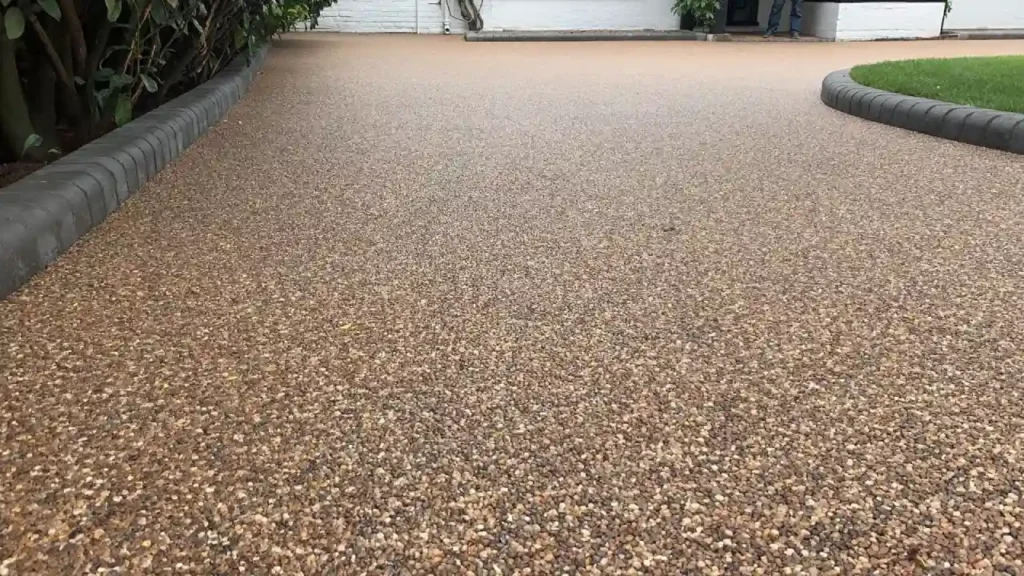
If you live near the sea in Bournemouth or elsewhere in Dorset, it is natural to question how long a resin driveway will last. Coastal weather brings salt air, wind-driven rain and fluctuating temperatures. No homeowner wants to invest in a new surface only to see it fade, crack or lift within a few years.
A professionally installed resin bound driveway in Bournemouth should last between 15 and 25 years, even in coastal conditions. In many cases, it lasts longer. The key factor is not the sea air. It is the quality of the installation beneath the surface.
This guide explains what truly affects lifespan, what causes early failure and whether resin is a sensible choice for South Coast properties.
How Long Does a Resin Driveway Typically Last?
In the UK climate, a properly installed resin bound driveway generally lasts 15 to 25 years. That estimate applies to coastal towns such as Bournemouth, Poole and Christchurch as much as it does inland areas.
Several conditions must be met for that lifespan:
- A correctly compacted MOT Type 1 sub-base
- A permeable base layer
- UV-stable polyurethane resin
- Proper thickness (usually 15–18mm)
- Accurate resin-to-aggregate ratio
When these standards are followed, coastal exposure does not significantly shorten the driveway’s life expectancy.
It is important to distinguish between resin bound and resin bonded systems. Resin bound is fully permeable and structurally stronger. Resin bonded systems are thinner and less durable. For longevity in Dorset’s wetter conditions, resin bound is the preferred option.
Does Sea Air or Salt Damage Resin Driveways?
No, sea air does not corrode a properly installed resin bound driveway.
The resin used in quality systems is polyurethane-based and resistant to salt exposure. The aggregates are natural stone and are not affected by coastal air in the way metal might be.
The real issue in coastal areas is not salt. It is drainage and structural movement.
Bournemouth experiences heavy rainfall throughout the year. If water cannot drain correctly through the surface and base, pressure can build beneath the driveway. That is what causes movement and cracking, not the sea breeze.
How Coastal Weather in Bournemouth Affects Driveways
Although resin itself handles coastal exposure well, environmental conditions still matter. Here is how they influence lifespan.
Heavy Rainfall and Drainage
Bournemouth and wider Dorset see consistent rainfall. A resin bound surface is permeable, meaning water drains through it rather than pooling on top.
However, permeability only works if:
- The sub-base is also permeable
- The ground beneath is properly prepared
- There is no blockage or compaction issue
If installed correctly, resin actually performs better than block paving or concrete in wet conditions.
Freeze–Thaw Cycles
While Dorset is milder than northern regions, winter temperatures still fluctuate. Water that seeps into poorly prepared ground can freeze and expand.
This expansion can cause cracking or lifting.
A solid, well-compacted sub-base prevents this issue. When homeowners report cracking within five to eight years, the cause is almost always inadequate groundwork rather than temperature alone.
UV Exposure and Sunlight
Direct sunlight can affect some materials over time.
High-quality UV-stable resin prevents yellowing and colour fading. Non-UV resin is cheaper but may discolour, particularly in lighter shades.
For coastal properties with strong summer sun exposure, UV-stable systems are strongly recommended.
What Causes Resin Driveways to Fail Early?
When a resin driveway fails within ten years, it is rarely because of location. It is almost always due to shortcuts during installation.
Inadequate Sub-Base Preparation
The sub-base is the structural foundation. It usually consists of compacted MOT Type 1 stone.
If it is too shallow or poorly compacted, the driveway may sink or shift. Coastal clay soils in parts of Dorset require careful preparation to avoid movement.
Incorrect Resin Ratio
The resin binds the aggregate together. If installers reduce the resin content to save cost, the surface becomes weaker.
This can lead to loose stones and surface breakdown within a few years.
Insufficient Thickness
Industry standards typically recommend a 15–18mm depth for domestic driveways. Thinner applications reduce durability and increase stress points.
Poor Edge Restraints
Strong edging prevents lateral movement. Without proper edge restraint, the driveway can begin to spread over time.
These technical details matter far more than proximity to the sea.
How Long Should a Properly Installed Resin Driveway Last in Bournemouth?
With correct installation, homeowners in Bournemouth, Poole and surrounding Dorset areas can reasonably expect:
- 15–25 years of lifespan
- Minimal structural issues
- Low maintenance requirements
- Stable colour retention with UV resin
Some installations exceed 25 years, particularly where the ground conditions are favourable and regular cleaning is carried out.
Coastal location alone does not reduce longevity when standards are met.
How to Extend the Lifespan of a Resin Driveway
Resin is considered low maintenance, but simple upkeep makes a difference.
To maximise lifespan:
- Sweep regularly to prevent debris build-up
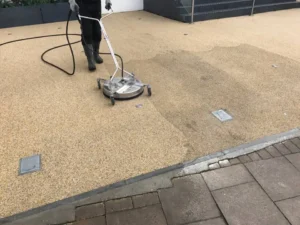
- Wash occasionally with a light pressure wash
- Avoid harsh chemical cleaners
- Keep drainage channels clear
- Address small damage promptly
Unlike block paving, resin does not allow weeds to grow through joints when installed correctly. This reduces ongoing maintenance compared to traditional paving systems.
Is Resin a Good Choice for Coastal Homes in Dorset?
For many properties in Bournemouth and wider Dorset, resin bound driveways are well suited to coastal conditions.
Compared to alternatives:
Block paving
- Can shift over time
- Requires joint re-sanding
- More prone to weed growth
Tarmac
- May soften in high heat
- Can crack with ground movement
- Not always permeable
Gravel
- Migrates easily
- Requires frequent levelling
- Less practical for slopes
Resin combines permeability with structural strength, making it particularly effective in high rainfall areas.
For coastal homes concerned about drainage and long-term appearance, it is often a practical balance between durability and aesthetics.
Final Thoughts
For homeowners in Bournemouth and across Dorset, coastal exposure is rarely the deciding factor in how long a resin driveway lasts. Installation quality is.
A properly prepared base, correct resin mix and UV-stable materials will withstand salt air, rainfall and seasonal temperature changes.
If you are considering a resin driveway in Bournemouth, the most important step is a professional site assessment. Ground conditions vary across the area, particularly in older coastal neighbourhoods.
BH Resin Driveways provides detailed surveys across Bournemouth, Poole and Christchurch, ensuring the base structure is designed for long-term performance rather than short-term savings.
A well-installed resin driveway should be a 15–25 year investment, not a five-year fix. Choosing the right contractor makes that difference.
Frequently Asked Questions
Does resin crack in winter?
Resin does not crack due to cold alone. Cracking usually results from poor sub-base preparation or ground movement beneath the surface.
Can salt from the sea stain resin?
No. Sea air does not stain or corrode properly installed resin bound surfaces. Quality aggregates and polyurethane resin are resistant to salt exposure.
Does resin fade in direct sunlight?
UV-stable resin prevents yellowing and fading. Non-UV systems are more likely to discolour over time, especially in lighter colours.
Can resin driveways be repaired near the coast?
Yes. Localised repairs are possible if damage occurs. Matching the original aggregate colour is usually achievable, though slight variation can happen over time.
What warranty should I expect?
Reputable installers typically offer workmanship guarantees. Material warranties may vary depending on the supplier. Always request written details before proceeding.