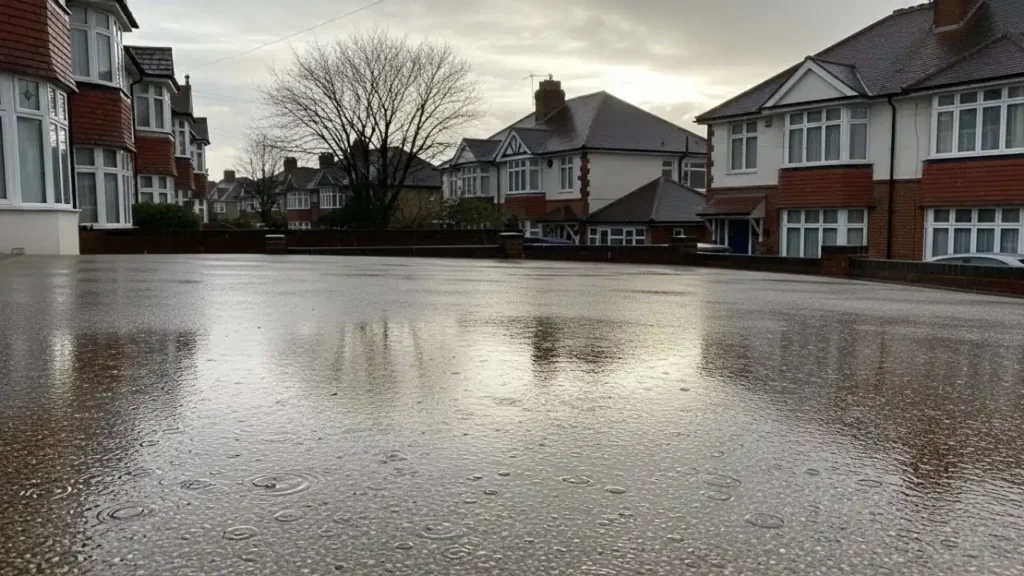
Winter in Bournemouth brings more than just shorter days and cooler air. For many homeowners, it also brings a familiar set of problems around their driveway. Persistent rain, damp ground, surface water and slippery conditions can quickly expose weaknesses in traditional driveway materials.
If you live on the south coast, you will already know that winter rain in Bournemouth is not usually dramatic or snowy. Instead, it is steady, frequent and often accompanied by high moisture in the air. This type of weather puts constant pressure on outdoor surfaces. That is why more homeowners are turning to resin driveways, not just for appearance, but for how well they perform in wet conditions.
At BH Resin Bound Specialist, we work with properties across the Bournemouth area and see first-hand how different driveway surfaces behave during the winter months. This guide explains why resin driveways handle winter rain so effectively and why they are a practical long-term choice for local homes.
Understanding Bournemouth’s Winter Rainfall
Bournemouth has a coastal climate. During winter, rainfall tends to arrive in frequent spells rather than short, heavy downpours. The ground often remains saturated for long periods, especially in low-lying or shaded areas. Combined with sea air and mild temperatures, this creates conditions where water struggles to drain away naturally.
Nearby coastal towns such as Poole experience similar rainfall patterns, while areas like Christchurch also deal with added moisture from rivers and estuaries. Inland locations such as Ferndown and Ringwood may see less sea air but often experience heavier ground saturation due to surrounding soil and trees.
For driveways, this combination of water, damp air and limited evaporation is challenging. Any surface that holds water or relies on poor drainage will struggle over time.
Common Driveway Problems Caused by Winter Rain
Many of the issues homeowners face during winter are not caused by extreme weather but by constant exposure to moisture.
One of the most common problems is standing water. Traditional driveways such as concrete, standard tarmac or poorly laid block paving do not allow water to pass through the surface. When rain has nowhere to go, puddles form. These puddles can freeze overnight, create slippery patches, and increase wear on the surface.
Another issue is surface runoff. Water flowing across a driveway can carry dirt, leaves and grit towards the house or pavement. Over time, this not only looks untidy but can also contribute to blocked drains and damp around entrances.
Safety is also a concern. Smooth or water-logged surfaces become slippery, particularly on sloped driveways or near doorways. For households with children, older residents or regular foot traffic, winter rain can turn a simple driveway into a daily hazard.
How Resin Driveways Handle Winter Rain Differently
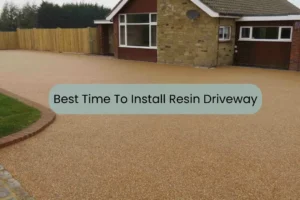
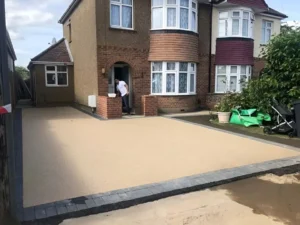
Resin driveways are designed with drainage in mind. Unlike traditional surfaces, a resin bound driveway is permeable. This means water does not sit on top of the surface. Instead, it passes through the structure and drains away below.
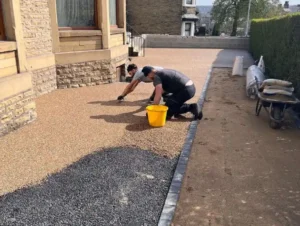
The surface is created using natural stone mixed with a clear resin binder. When laid correctly, the stones form an open structure that allows water to flow freely through the driveway. This design works in line with SuDS principles, which aim to manage surface water naturally and reduce pressure on local drainage systems.
During winter rain, this permeability is a major advantage. Even after prolonged rainfall, a resin driveway remains free from puddles. Water drains vertically rather than spreading across the surface or towards the property.
Why Resin Driveways Reduce Puddles and Flooding
In wet conditions, the ability to manage surface water is critical. Resin driveways reduce puddles because they do not rely on slopes or channels to move water away. Instead, water drains evenly across the entire surface.
This is especially helpful for driveways that are flat, slightly sloped or located in low-lying areas. Rather than water collecting in dips or near garage entrances, it is absorbed through the surface and dispersed below.
For homes in Bournemouth that experience repeated winter rain, this makes everyday use easier. There is less splashing when parking, fewer slippery patches, and a reduced risk of water being pushed towards walls or door thresholds.
Resin Driveways Compared to Other Surfaces in Wet Weather
When comparing driveway materials, winter rain is where resin often outperforms alternatives.
Block paving relies on joints filled with sand. During prolonged wet periods, these joints can wash out or allow water to sit between blocks. Over time, this leads to movement, uneven surfaces and weed growth. In winter, frozen water between blocks can worsen these problems.
Concrete and traditional tarmac are non-permeable. Water remains on the surface and drains only where slopes allow. This increases puddling and can lead to cracking as water freezes and expands.
Resin driveways, by contrast, combine permeability with flexibility. Water drains through the surface, and the resin binder can accommodate small movements without cracking. This combination makes resin a strong performer during wet winters.
Why Resin Driveways Suit Bournemouth’s Coastal Conditions
Coastal homes face additional challenges during winter. Salt carried in the air settles on outdoor surfaces, and damp conditions encourage algae growth. Over time, this can affect the appearance and safety of some driveway materials.
Resin driveways cope well with these conditions. The smooth but textured surface resists algae build-up when kept clean, and occasional rinsing helps remove salt residue. Because water drains through the surface, moisture does not linger long enough to encourage widespread growth.
For Bournemouth properties near the sea, this means a driveway that stays cleaner, safer and more reliable throughout winter.
Long-Term Benefits of Resin Driveways in Wet Climates
The benefits of resin driveways extend beyond a single winter. Over time, good drainage reduces surface wear and minimises the damage caused by freeze and thaw cycles. Fewer puddles mean less stress on the surface and surrounding areas.
Maintenance is also simpler. There are no joints to refill, fewer weeds to remove and less standing water to clean up after storms. For homeowners, this translates into a driveway that looks better with less effort, even during the wettest months.
Resin driveways also maintain their appearance well. With proper installation and basic care, they remain attractive year-round, which helps preserve kerb appeal even in winter.
Winter Maintenance Tips for Resin Driveways
Although resin driveways perform well in winter rain, a small amount of care helps keep drainage working efficiently.
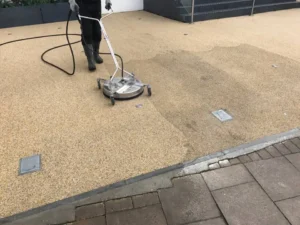
Regular sweeping removes leaves and debris that could block drainage pores. This is particularly important after storms or during periods of heavy leaf fall. Occasional rinsing with clean water helps remove dirt and salt build-up.
Avoid harsh chemicals, bleach or metal tools, as these can damage the surface. If grip is needed during icy mornings, a small amount of sharp sand is a safer option than rock salt.
Is a Resin Driveway Worth It for Bournemouth Winters?
For homeowners dealing with regular winter rain, the answer is often yes. Resin driveways are designed to handle wet conditions more effectively than many traditional surfaces. Their drainage performance, safety benefits and low maintenance requirements make them well suited to Bournemouth’s climate.
While installation is usually planned for warmer months, winter is an ideal time to research options and book ahead. Many homeowners choose to plan during winter so their driveway can be installed in spring or early summer.
Final Thoughts
Bournemouth’s winter rain is a reality of coastal living. Choosing a driveway that can cope with frequent moisture makes everyday life easier and helps protect your property. Resin driveways offer a practical solution by allowing water to drain naturally, reducing puddles and improving safety during wet weather.
If you are considering a new driveway or want advice tailored to local conditions, BH Resin Bound Specialist can help you explore whether a resin driveway is the right choice for your home. Planning ahead now can ensure your property is ready to face the next winter with confidence.